
Jean de La Fontaine
From Versailles to Washington: How Two Timeless Fables Explain Today's Global Economy
For the past three weeks, I stepped away from Bloomberg screens, central banks and financial markets and spent the summer holidays in Mykonos in one of our funds’ properties, with my twelve-year-old daughter. Every year, the island becomes a fascinating laboratory of human behavior. From early afternoon until sunrise, beach clubs are packed, restaurants are full, luxury boutiques welcome a constant flow of visitors, superyachts fill the marinas, and millions of euros are spent every single day with remarkable ease. Mykonos has a unique way of making you believe that summer and the good times will last forever.
Before leaving for the holidays, I gave my daughter a collection of Jean de La Fontaine’s fables. One evening, as we were sitting together by the pool after dinner, I asked her which story she liked the most. Without hesitation, she answered, Le Bœuf et la Grenouille—The Ox and the Frog. I smiled because my own favorite has always been La Cigale et la Fourmi—The Cicada and the Ant.
For the next hour, we spoke about the two stories. She told me why she loved the frog, fascinated by its determination to inflate and to become as big as the ox, just to find itself explode at the end. I told her that I had always preferred the ant, patiently working throughout the summer while everyone else was singing, dancing and enjoying the sunshine.

As I watched the crowds of Mykonos, I realized that these two fables, written more than three centuries ago, may offer one of the best descriptions of today’s world economy. One is about the temptation to become bigger than your foundations allow. The other is about enjoying the summer while forgetting that winter always comes. Together, they capture some of the most revealing characteristics of today’s global economy. Returning to my desk this week, I realized that no economic model, no regression and no Bloomberg chart could have provided a better introduction to this week’s Macro Anchor than two timeless fables written by Jean de La Fontaine.
When Jean de La Fontaine published La Cigale et la Fourmi in 1668, France stood at the beginning of a remarkable period of national ambition. Under Louis XIV, the kingdom expanded its military power, projected its influence across Europe and built some of the greatest monuments in its history, including the Palace of Versailles. It was an age of confidence, prestige and extraordinary public expenditure. Much of that ambition, however, was financed through borrowing. Jean-Baptiste Colbert worked tirelessly to restore discipline to the kingdom’s finances, yet each new war demanded additional spending, higher taxes and more debt. What appeared to be an era of limitless prosperity quietly laid the foundations for a fiscal problem that would persist for generations.
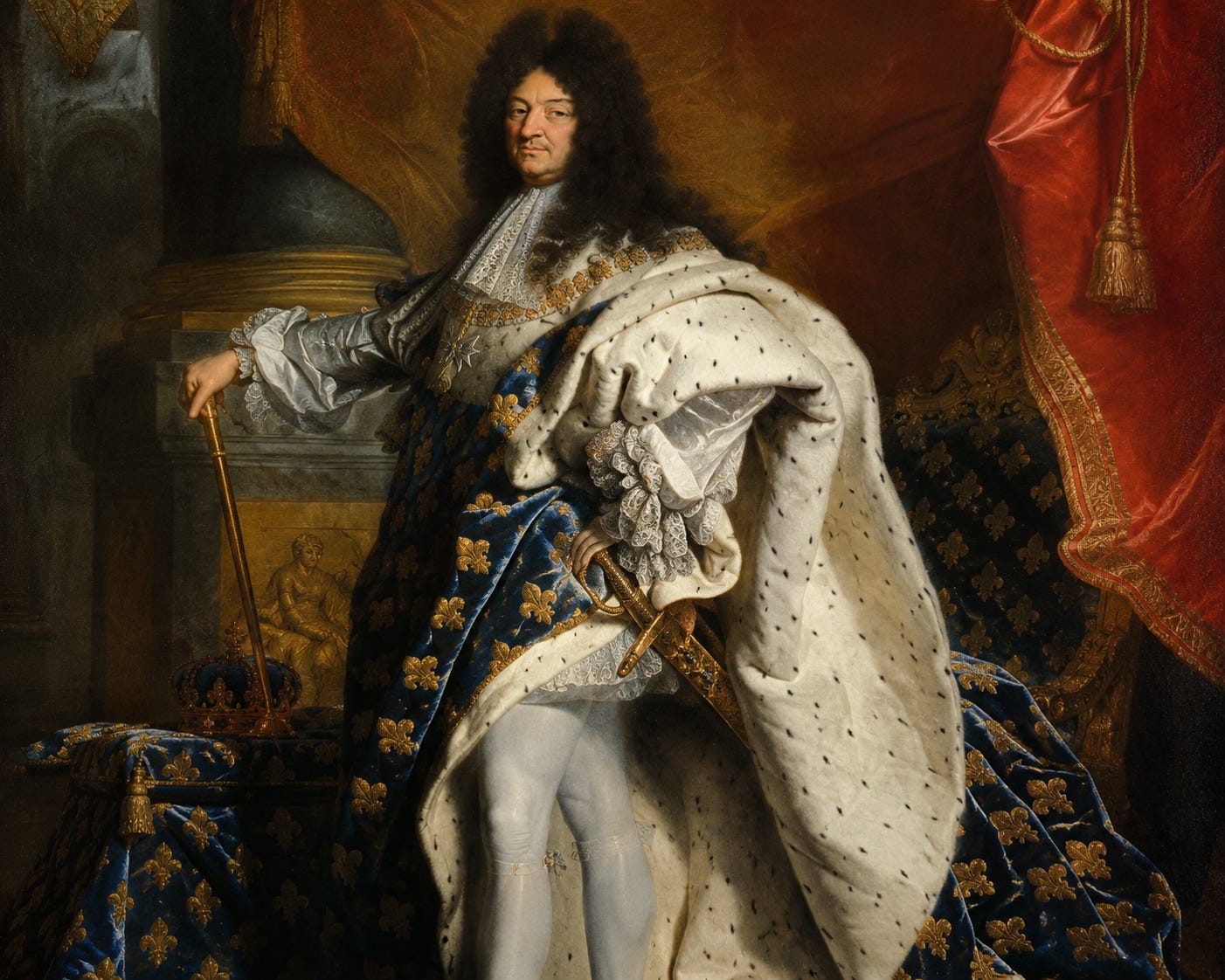
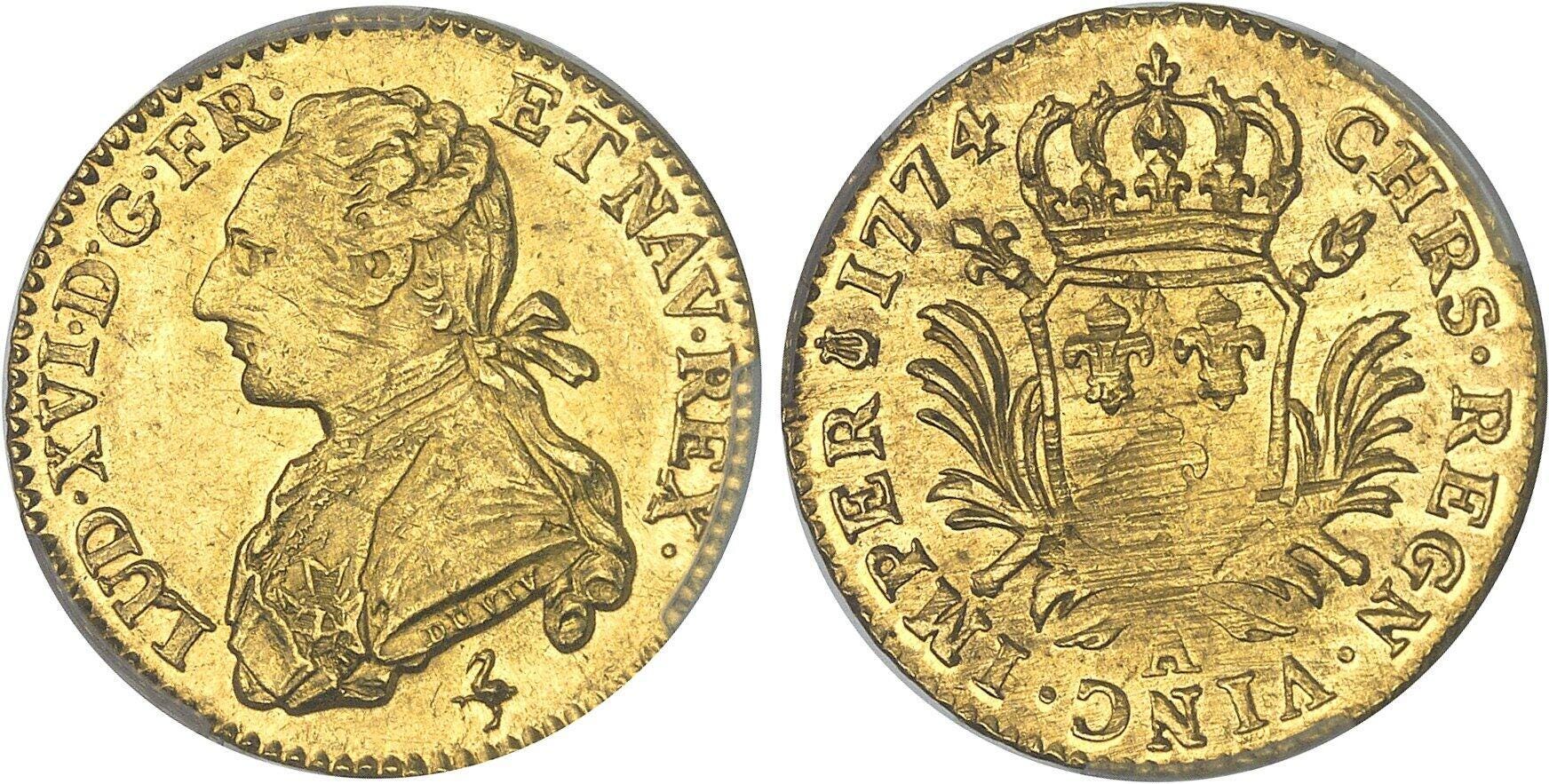
La Fontaine died in 1695, long before the crisis reached its conclusion. Louis XIV also passed away without witnessing the full consequences of the financial trajectory that had begun under his reign. Yet the debt continued to accumulate under their successors. By the time Louis XVI became king almost eighty years later, France’s finances had become increasingly fragile. Decades of borrowing, combined with the enormous cost of supporting the American Revolution, pushed the monarchy toward insolvency. In 1789, the financial crisis forced the Crown to summon the Estates-General for the first time in 175 years. The fiscal crisis quickly evolved into a political revolution, and within a few years the monarchy itself had disappeared.
Today, another great power stands at the center of the global financial system. The United States has financed financial crises, wars, tax cuts, the pandemic, industrial policy and rising entitlement spending through ever larger budget deficits. Federal debt now exceeds 120% of GDP, annual deficits remain exceptionally large even in the absence of recession, and the Treasury must refinance trillions of dollars of debt every year while issuing still more to finance new borrowing. The comparison with France is not about predicting the fall of a republic or the collapse of an empire. History never repeats itself in exactly the same way. The comparison is about the arithmetic of public finance. Once structural deficits become a permanent feature of government, debt compounds year after year. Eventually, financial markets begin asking a simple question: who will absorb the growing supply of government bonds?
That question is increasingly reflected in today’s bond market. Even when investors expect the Federal Reserve to stay neutral, long-term Treasury yields remain elevated because the market is pricing something much larger than the next policy meeting. It is pricing decades of continued borrowing. Central banks determine the overnight interest rate. The market determines the long-term price of capital. Perhaps that is why La Cigale et la Fourmi remains so relevant today. The fable is not merely about one insect saving while another spends. It is about the consequences of believing that every summer will last forever. Three and a half centuries later, the setting has changed from the court of Versailles to the U.S. Treasury market. The lesson, however, remains remarkably familiar.
Returning to Athens after three weeks in Mykonos, I did what every macroeconomist eventually does after a holiday: I opened my Bloomberg terminal to see what had changed while I was away. Four developments immediately caught my attention.
First, the geopolitical situation has deteriorated once again. The hope that the confrontation with Iran had entered a period of de-escalation has faded. The naval blockade has returned, attacks on shipping have resumed, and the risk of disruption to energy supplies through the Gulf remains very real. Oil prices have climbed back toward the $100 per barrel level as markets price in the possibility of a prolonged energy shock rather than a short-lived geopolitical event.
Second, the U.S. dollar continued to strengthen (one of our main forecasts). After months of weakness, investors are still seeking the safety and liquidity of the world’s reserve currency. The dollar’s rebound reflects a renewed demand for safe assets as geopolitical uncertainty and inflation risks increase.
However, the bond market continues to sell off. Instead of rallying with the dollar during a geopolitical crisis, long-term government bonds have come under pressure as investors reassess the inflationary consequences of higher energy prices and the growing supply of government debt. U.S. Treasury yields have climbed toward recent highs while 30-year yields remain above 5%, suggesting that fiscal concerns are increasingly dominating the long end of the curve.
Finally, volatility is beginning to return across global financial markets. Oil, currencies, equities and bond yields are all experiencing larger daily moves, reflecting a market that is once again repricing geopolitical risk after several months of relative calm.
Looking at these four developments together, I could not help thinking once again about La Fontaine’s The Cicada and the Ant. Beneath the daily headlines, markets appear to be asking the same question that the fable posed more than three centuries ago: what happens when years of confidence meet a sudden reminder that resources, security and capital are not unlimited? Today, that question lies at the heart of both geopolitics and financial markets.
Against this backdrop, the Federal Reserve meets today. Financial markets will naturally focus on the usual questions. Will the Fed raise or cut interest rates later this year? Will Chair Kevin Warsh acknowledge the recent rise in oil prices? Will the Committee become more concerned about inflation following the renewed tensions in the Middle East? Every word of the statement will be dissected, and every sentence of the press conference will be analyzed.
Yet I believe investors are increasingly asking the wrong question. The Federal Reserve remains one of the most powerful institutions in the world, but it cannot control the forces that are now driving the global economy. It cannot reopen shipping lanes in the Middle East. It cannot eliminate geopolitical risk. It cannot reduce the amount of debt issued by the U.S. Treasury. And it cannot force investors to lend money to the U.S. government at interest rates they no longer consider adequate.
This is precisely why the recent behavior of financial markets is so important. The strengthening of the U.S. dollar reflects a renewed search for liquidity and safety. The rise in oil prices reflects increasing geopolitical risk and the possibility of another inflationary shock. The sell-off in long-term Treasury bonds reflects growing concern about the future supply of government debt. Rising market volatility tells us that investors are beginning to reassess risks that only a few months ago appeared largely under control.
Taken individually, each of these developments could be explained away. Together, however, they tell a coherent story. Markets are gradually shifting their attention away from monetary policy and toward fiscal sustainability and geopolitics. This may become one of the defining characteristics of the next economic cycle.
For nearly two decades, investors viewed central banks as the dominant force shaping financial markets. Every major move in bonds, equities and currencies revolved around the next Federal Reserve decision. Today, that hierarchy appears to be changing. Fiscal policy, government borrowing, energy security and geopolitical developments are increasingly setting the direction, while central banks are becoming reactive rather than decisive.
That is the challenge facing the Federal Reserve today. It can influence overnight interest rates, but it cannot determine the long-term price of capital. Long-term Treasury yields are increasingly reflecting forces that lie outside the Fed’s control: persistent fiscal deficits, expanding Treasury issuance, geopolitical uncertainty and the inflation premium demanded by investors.
In many respects, the new Chair finds himself in a position not entirely different from that of Jean-Baptiste Colbert more than three centuries ago. Colbert understood the importance of fiscal discipline and repeatedly attempted to strengthen the finances of the French Crown. Yet the ambitions of the state consistently exceeded its financial resources. Today, the Federal Reserve is attempting to preserve price stability while operating alongside a government that continues to finance large structural deficits. Monetary policy can influence liquidity. It cannot substitute for fiscal discipline.
As France entered the eighteenth century, the fiscal pressures created during the reign of Louis XIV did not simply disappear. Decades of military campaigns, ambitious public projects and persistent borrowing had left the monarchy with an increasingly fragile financial system. Successive governments repeatedly altered the value of the currency, debased coinage and experimented with monetary reforms in an attempt to ease the growing burden of debt. These measures provided temporary relief, yet they did little to address the underlying imbalance between government spending and public revenues. Eventually, confidence in the monetary system itself began to erode.
At the same time, another trend was quietly reshaping French society. Wealth became increasingly concentrated while the fiscal burden remained deeply unequal. Much of the nobility and the clergy continued to enjoy extensive tax privileges, while peasants, artisans and the emerging middle class carried a disproportionate share of the state’s financing. Inflation, currency instability and repeated fiscal adjustments reduced the purchasing power of ordinary households, whereas those who owned land, financial assets or possessed political influence were generally better positioned to protect their wealth. Economic inequality widened, social mobility weakened and resentment steadily accumulated beneath the surface.
The lesson from this period extends well beyond eighteenth-century France. Fiscal deterioration rarely unfolds as a simple debt story. It gradually transforms into a story about money, purchasing power and the distribution of wealth. Governments struggling to finance themselves often resort to subtle forms of monetary adjustment that transfer resources across society. Some citizens experience these policies through higher prices, lower real wages or reduced purchasing power. Others benefit from rising asset prices, privileged access to capital or the ability to protect themselves against inflation. Over time, the gap between the winners and the losers widens, creating tensions that become increasingly difficult to manage through monetary policy alone.
By the time Louis XVI inherited the throne, France’s challenge was no longer simply one of public debt. It had evolved into a crisis of confidence in the state’s finances, accompanied by growing social inequality and mounting political frustration. History shows that when fiscal imbalances persist for decades, monetary adjustments can postpone the reckoning, but they rarely eliminate it. Instead, they often change who ultimately bears the cost.
This brings me back to the fable my daughter chose. In The Frog and the Ox, the frog looks at the ox and becomes consumed by a single ambition: to become as large as the animal standing before it. It inflates itself again and again, convinced that one more breath will finally make it equal to the ox. Each expansion brings a temporary sense of achievement, but it also makes the frog more fragile. Eventually, one final breath is enough. The frog bursts.

For centuries, the fable has been read as a lesson about vanity. I believe it is also a remarkably accurate description of financial history. A healthy economy resembles the ox. Its growth is supported by productivity, innovation, investment, rising real incomes and sustainable public finances. Its strength comes from genuine economic capacity. The frog follows a different path. Instead of becoming stronger, it becomes larger. Debt replaces savings. Monetary expansion replaces productivity. Asset inflation replaces wealth creation. Government borrowing substitutes for structural reform. For a time, the illusion works. The economy appears bigger, financial markets reach new highs and confidence becomes self-reinforcing. Yet each new expansion makes the system more dependent on low interest rates, abundant liquidity and uninterrupted stability.
Eventually, the system reaches a point where it no longer requires a major shock. It only requires the event that exposes how fragile it has already become.
That is why the developments in the Middle East deserve far more attention than a typical geopolitical headline. If the confrontation between the United States and Iran is resolved quickly, the global economy may absorb another temporary spike in energy prices. If it evolves into a prolonged disruption of shipping routes and energy supplies, the consequences become much larger. Higher oil prices would feed inflation, complicate central bank policy, keep long-term interest rates elevated and increase the financing costs of governments already carrying record levels of debt.
The risk, therefore, is not that the conflict creates the fragility. The fragility already exists. Years of rising public debt, expanding central bank balance sheets, elevated asset valuations and widening fiscal deficits have inflated the system to a point where its margin for error has become increasingly narrow. The geopolitical shock merely determines whether the final breath arrives today, next month or several years from now.
La Fontaine’s genius was not that he wrote about frogs and oxen. It was that he understood something fundamental about human behavior. Societies, like individuals, often mistake size for strength. History repeatedly shows that they are not the same thing.
Regards,
Andre Chelhot, CFA
Editor,
The Macro Anchor
Fantastic post, I concur, we live in pre-revolutionary times and it has been a recurring them in my own posts. I recommend reading Florin Aftalion's book "The French Revolution: An Economic Interpretation".