
The New Middle East
Part I – From War to a New Regional Order

The recent Memorandum of Understanding between the United States and Iran marks a potential turning point in the geopolitical landscape of the Middle East. Although the final agreement is still under negotiation, the broad framework is already visible. The understanding envisages a ceasefire in Lebanon and a pathway toward an Israeli withdrawal from southern Lebanon, the reopening and continued freedom of navigation through the Strait of Hormuz, the phased release of frozen Iranian assets for humanitarian purposes, the resumption of Iranian oil exports, and the gradual reintegration of Iran into the international financial system. Reports also suggest that a reconstruction and development package approaching $300 billion could eventually be financed primarily by Gulf investors and sovereign wealth funds. In exchange, Iran would be expected to abandon its military nuclear ambitions, reduce its regional military involvement, and become increasingly integrated into the regional and global economy.
If this framework ultimately materializes, it raises three fundamental questions. First, what has this war actually achieved and what has it cost? Second, what will be the long-term implications for global oil production? Third, is Iran emerging as the dominant economic and political force in the Middle East?
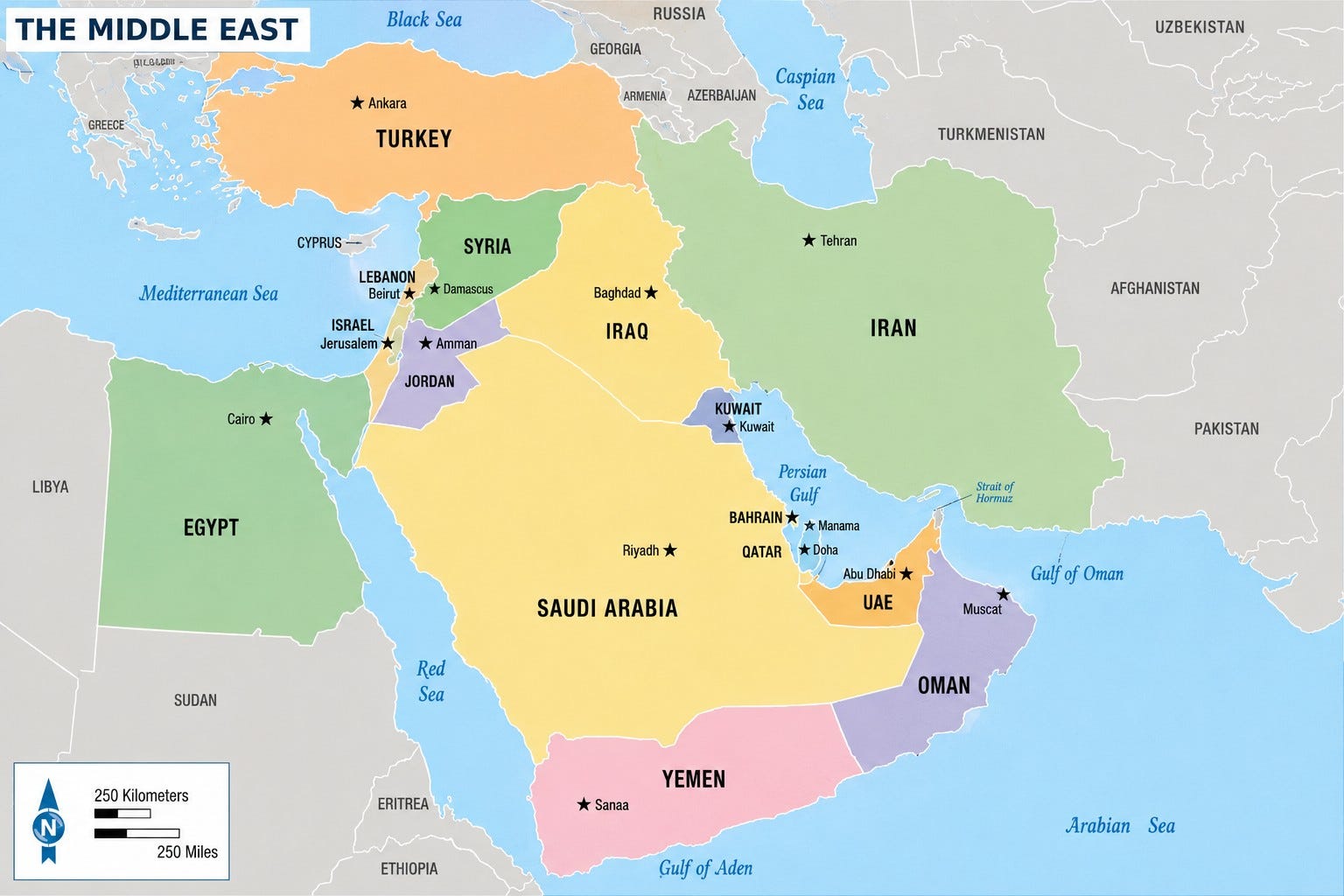
Let us begin with the first question. The answer requires separating military objectives from economic outcomes.
From a strategic perspective, the principal objectives of the United States and Israel were straightforward. The first was the dismantling of Iran’s military nuclear program. The second was the dismantling of Iran’s ballistic missile capabilities. At the present stage, neither objective has yet been achieved. The negotiations continue precisely because these issues remain unresolved and still constitute the core of any final agreement. In other words, despite the military campaign, the two principal strategic objectives that justified the war remain on the negotiating table.
The economic cost of the conflict, however, has been enormous and extends far beyond the physical destruction inside Iran and Israel. The first and most visible cost came through higher energy prices. Assuming that approximately 20 million barrels of oil per day traded with an average geopolitical premium of roughly $30 per barrel over a period of about 120 days, the direct additional cost to the global economy approaches $72 billion.
The much larger cost came through inflation. Energy remains one of the most important transmission mechanisms into transportation costs, producer prices and ultimately consumer inflation. If this conflict ultimately raises global inflation by only one percentage point, the macroeconomic cost becomes extraordinary. With world GDP of roughly $100 trillion, a one percentage point increase in the global price level represents approximately $1 trillion of lost purchasing power. This figure dwarfs the direct cost associated with higher oil prices and illustrates how regional conflicts rapidly become global macroeconomic events.
The inflationary cost of the conflict extends well beyond the immediate loss of purchasing power. Higher inflation also forces investors to demand a higher inflation risk premium on long-term bonds. Even a permanent increase of only 50 basis points in long-term interest rates would have profound consequences for the global economy. With global debt approaching $300 trillion, an additional 0.5 percentage points in borrowing costs represents approximately $1.5 trillion in additional annual interest expense once existing debt is refinanced. Unlike the temporary increase in oil prices, this higher debt-servicing burden can persist for years, reducing fiscal space, crowding out investment and slowing long-term economic growth
Yet this is only one side of the ledger. The economic settlement points in the opposite direction for Iran. Despite the physical destruction caused by the war, the negotiated outcome would place the Iranian economy in a materially stronger position than before the conflict. Prior to the war, Iran remained constrained by sanctions, restricted access to international finance, limited oil exports and a high sovereign risk premium. Under the proposed framework, Iran would regain access to international banking channels, resume oil exports, recover part of its frozen assets, receive substantial reconstruction financing, attract foreign investment, particularly from Gulf countries, and significantly reduce its country risk premium. The reopening of financial markets alone would lower financing costs throughout the economy, while reconstruction spending would stimulate domestic investment for years.
This distinction is critical. The war itself destroyed wealth. The settlement, however, has the potential to leave Iran economically stronger than it was before the conflict began. The relevant comparison is therefore not between Iran before and immediately after the bombing campaign, but between Iran before the war and Iran after the implementation of a comprehensive agreement. On that basis, despite the destruction, the economic gains from sanctions relief, renewed oil exports, financial reintegration, reconstruction investment and improved access to international capital markets would place Iran in a stronger economic position than the one it occupied before the war.
The first conclusion is therefore somewhat paradoxical. Militarily, the two principal strategic objectives of the war: the dismantling of Iran’s nuclear and ballistic missile programs, remain unresolved. Economically, however, if the Memorandum of Understanding evolves into a comprehensive agreement, Iran stands to emerge in a considerably stronger position than it occupied before the conflict, while the world economy will have absorbed hundreds of billions of dollars in higher energy costs and potentially around one trillion dollars through higher global inflation. This makes the economic balance sheet of the conflict very different from its military balance sheet.
The second question is perhaps even more important than the first because it shifts the discussion from geopolitics to microeconomics. The issue is no longer who won the war, but how the settlement could fundamentally reshape the global oil market.
The starting point is straightforward. If a comprehensive agreement is reached, Iran will have every incentive to maximize oil production. Reconstruction requires revenues, foreign exchange and investment. The fastest way to generate all three is through higher oil exports. Unlike before the war, Iran would no longer face the same sanctions, financial restrictions and export constraints that had limited its production for years. Industry estimates suggest that Iran could restore production to its pre-war levels within six months.
But Iran is not the only producer changing its behavior. The United Arab Emirates has already chosen greater production flexibility by leaving OPEC. Iraq continues to demand higher production quotas as its productive capacity expands. Russia remains one of the world’s largest exporters despite years of sanctions, while U.S. shale production continues to operate at historically elevated levels. At the same time, Saudi Arabia faces an increasingly difficult strategic choice. It can continue sacrificing market share to defend oil prices, or it can accept lower prices in order to defend its own share of global production.
This is where microeconomics becomes more important than geopolitics. OPEC functions as a cartel. Cartels maximize profits by restricting supply. That strategy only works when members have similar incentives and cooperate. Once several members begin pursuing higher production because they need revenues, investment or market share, cartel discipline inevitably weakens. The dominant producer eventually reaches the conclusion that continuing to restrict its own output simply transfers market share to competitors. That appears to be exactly the environment that is now emerging. Iran needs to finance reconstruction. Iraq wants to increase production. The UAE has already chosen greater production flexibility. Russia continues exporting large volumes, while American shale producers remain highly competitive. Under these conditions, Saudi Arabia may conclude that defending market share has become more important than defending prices.
The market itself appears to be reaching the same conclusion. During the conflict, the oil futures curve moved into backwardation as traders priced immediate supply disruptions and the risk of a prolonged closure of the Strait of Hormuz. Yet as negotiations progressed and the prospect of a comprehensive agreement increased, large parts of the crude futures market rapidly moved back toward contango. This is a powerful signal. The futures market is effectively saying that today’s supply tightness is temporary. Traders are already looking beyond the war and anticipating a market characterized by greater future supply rather than prolonged scarcity.
This change in the futures curve should not be underestimated. Markets are no longer pricing an extended geopolitical supply shock. Instead, they are beginning to price the possibility of a structural increase in global oil production. If Iran restores between one and one and a half million barrels per day, while Iraq increases production, the UAE continues expanding capacity, Russian exports remain available, and Saudi Arabia ultimately abandons the role of sole swing producer, the market could face a substantial increase in effective supply. The result would not simply be the disappearance of the war premium. It could represent a structural shift toward lower equilibrium oil prices than those prevailing before the conflict.
At first glance, one might argue that Iran’s proposal to charge transit tolls through the Strait of Hormuz would offset some of this downward pressure. In isolation, such a toll functions much like a tariff or an excise tax. It increases the cost of moving oil through the Strait and would normally shift the supply curve upward, raising prices and reducing quantities traded. However, that conclusion ignores the broader competitive environment. In a market characterized by excess supply, the incidence of the toll changes dramatically. Rather than being passed entirely to final consumers, much of the burden is likely to be absorbed by producers competing aggressively for market share. As additional barrels from Iran, Iraq, the UAE, Russia and the United States enter the market, exporters have strong incentives to lower their net selling prices in order to remain competitive.
This creates a fascinating economic outcome. The toll does not necessarily prevent oil prices from falling. Instead, it redistributes part of the exporters’ revenues to Iran. Consumers may experience only a limited increase in the final price they pay, while competing oil exporters receive lower net prices after paying the transit charge.
In other words, Iran would not simply be exporting more oil. It would also begin extracting an economic rent from one of the world’s most important energy corridors. The Strait of Hormuz would become a source of recurring revenue, allowing Iran to capture part of the value generated by the oil exports of its neighboring countries. Rather than bearing the full burden of reconstruction itself, Iran would effectively transfer part of that burden onto competing Gulf exporters through geography. If this analysis proves correct, the peace agreement could mark more than the end of a regional conflict. It could signal the beginning of a new competitive phase in the global oil market, one characterized by higher production, weaker cartel discipline, structurally lower oil prices and a redistribution of regional oil rents toward Iran through its strategic control of the Strait of Hormuz.
The third question is whether Iran is emerging as the dominant economic and political force in the Middle East.
The answer is not that Iran becomes dominant in the old imperial sense. It does not need to occupy territory, control governments directly or win a conventional military victory. The more important point is that Iran may emerge from the settlement with a new form of regional power: economic leverage, financial reintegration, energy relevance and control over a strategic corridor through which its neighbors must continue to trade with the world.
Before the war, Iran was powerful but constrained. It had influence across the region, but it was financially isolated. It had oil, but it could not sell freely. It had geography, but it could not fully monetize it. It had military deterrence, but at the cost of sanctions, underinvestment and economic stagnation. The proposed settlement changes that balance. Iran would keep the core of its state power, regain access to oil markets, reopen financial channels, attract reconstruction capital and possibly extract recurring revenue from the Strait of Hormuz.
That is a very different Iran from the one that existed before the conflict.
The most important transformation is that Iran would move from being a sanctioned regional disruptor to becoming an investable regional platform. Gulf capital, if it enters Iran, would not merely finance reconstruction. It would create mutual dependence. The same countries that once viewed Iran mainly as a security threat would become stakeholders in its economic stabilization. That changes the politics of the region. Once capital flows into infrastructure, energy, logistics and industry, Iran becomes harder to isolate again.
At the same time, Iran’s position in the oil market would strengthen. Its own production would return, but more importantly, it would gain leverage over the exports of others through Hormuz. If a toll or transit mechanism is eventually accepted, Iran would be capturing rent from the dollar-based oil trade of its neighbors. That is the trick. Iran would not only earn from its own barrels; it would earn from the system that carries Saudi, Iraqi, Kuwaiti, Qatari and Emirati energy to the world.
This is why the settlement could alter the regional hierarchy. Saudi Arabia remains richer, the UAE remains more advanced financially, and Qatar remains enormously wealthy through gas. But Iran has something different: population, geography, energy, military depth, industrial potential and now potentially access to capital. If sanctions are lifted and investment returns, Iran becomes the only country in the region that combines scale, resources, strategic geography and political endurance.
The political consequence is also significant. If Iran reduces its regional military involvement in exchange for economic normalization, it does not necessarily become weaker. It may simply shift from hard-power influence to economic and corridor-based influence. That is more sustainable. Instead of spending resources to maintain pressure across the region, Iran could use reconstruction, oil exports, financial reopening and Hormuz revenues to strengthen the domestic economy and deepen its regional bargaining power.
One final point deserves attention here. The entire regional settlement ultimately rests on the successful implementation of the Lebanon agreement. The framework appears to be based on reciprocity: Lebanon dismantles Hezbollah’s military infrastructure while Israel withdraws from southern Lebanon. Whether one agrees with the arrangement or not, its implementation has become a cornerstone of the broader regional settlement. Any serious deterioration in Lebanon, any collapse of the agreement or return to military confrontation, could easily derail the entire process of normalization between Iran and the United States. That is precisely why all the principal parties now appear to share a common interest in preventing a renewed escalation. The economic and geopolitical stakes have become far too large for any side to allow Lebanon to become the spoiler of a much broader regional realignment.
If this framework ultimately becomes reality, then the implications extend far beyond Iran, Israel and Lebanon. They reach into the foundations of the global economy. A structurally lower oil price, a transformed Middle Eastern energy market, a reallocation of economic rents through the Strait of Hormuz and the reintegration of Iran into the international financial system would represent far more than a regional settlement. They would redefine the relationship between energy, capital and geopolitics for years to come.
This naturally leads to three broader questions that deserve a separate analysis. What does this new equilibrium mean for the global economy and the future path of inflation and interest rates? What does it mean for the international dollar system, where the Gulf has long played a central role in recycling oil revenues into global financial markets? And finally, what does this new Middle East mean for the Gulf economies themselves and for the Mediterranean countries that stand to become the natural bridge between Europe and a rapidly integrating region?
Those questions will be the subject of the next article.
Regards,
Andre Chelhot, CFA
Editor,
The Macro Anchor